
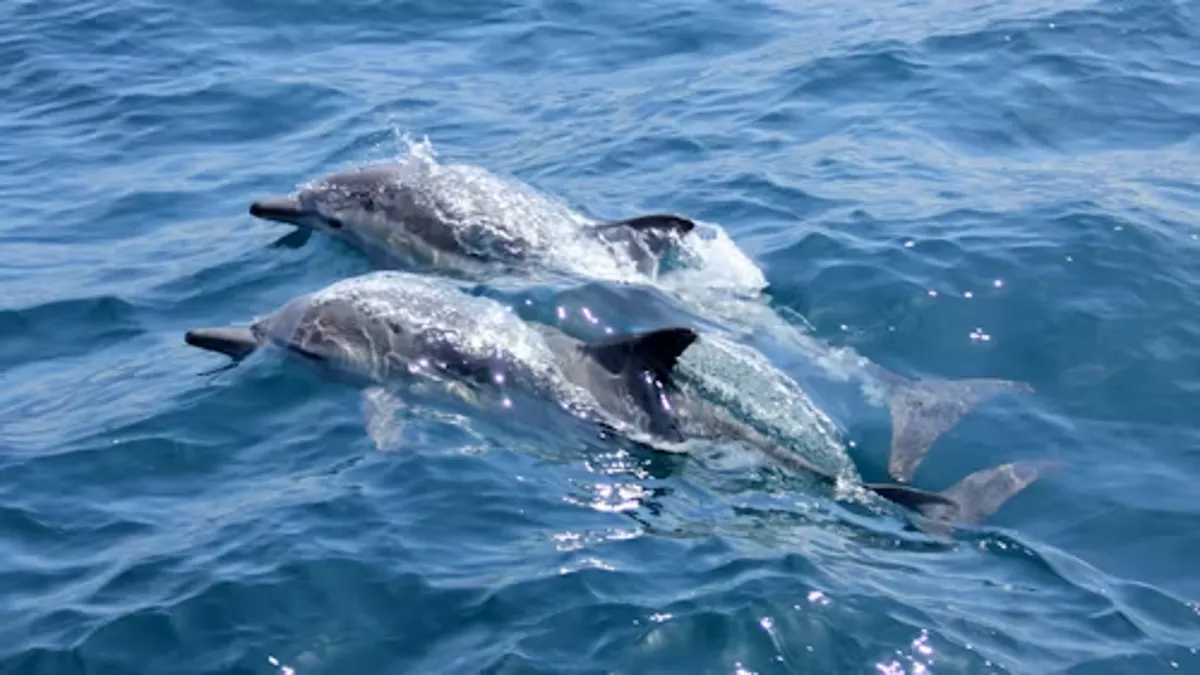
Dolphins and porpoise are often mistaken for one another, but the distinction between them is far more than a matter of terminology. Within the first hundred words, the difference becomes fundamental: dolphins and porpoises belong to separate families, exhibit distinct anatomical structures, communicate differently, form different social systems, and face contrasting conservation pressures. Their similarities, shaped by millions of years of shared ancestry as toothed whales, make the confusion understandable; yet their differences matter deeply for biology, ecology, and conservation. Over time, these marine mammals have evolved into separate expressions of intelligence, adaptation, and survival, occupying ecological niches that reveal how subtle variations can profoundly shape life beneath the surface.
As sentinels of ocean health, both dolphins and porpoises offer clues about marine conditions. Their presence or decline in a region often signals shifts in environmental quality, prey availability, or human impact. Understanding how these animals differ helps illuminate the broader systems in which they live, and clarifies why protection strategies cannot treat them as interchangeable. The charismatic behavior of dolphins has long captivated the public; the quieter, more reserved porpoises, meanwhile, often slip unnoticed through coastal and cold-water environments. This article examines their physical distinctions, social lifestyles, ecological functions, and conservation challenges providing the clarity necessary to appreciate two remarkable yet divergent branches of marine evolution.
Origins and Classification
Dolphins and porpoises share the order Cetacea, a lineage that includes all whales, dolphins, and porpoises. Yet their evolutionary paths split at the family level: dolphins belong primarily to the Delphinidae family, while porpoises belong to the Phocoenidae family. The number of dolphin species greatly exceeds that of porpoises, reflecting a broader and more diverse adaptive radiation across both open ocean and coastal environments. Porpoises, by contrast, comprise only a few surviving species, most of which inhabit colder or temperate coastal waters.
This divergence in classification underscores how two visually similar marine mammals have followed distinct patterns of evolution. Their shared traits air breathing, echolocation, complex communication, and live birth reflect their common ancestry; their differences highlight how divergent ecological pressures sculpted unique forms, diets, and social structures. Classification, though seemingly academic, provides the foundation for understanding how conservation efforts must differ between the two groups.
Anatomy: A Tale of Shape, Teeth, and Function
Comparative Anatomy Table
| Feature | Dolphins | Porpoises |
|---|---|---|
| Snout Shape | Elongated, pronounced beak | Rounded, blunt face |
| Teeth | Conical, suited for gripping prey | Spade-shaped, adapted for small schooling fish |
| Dorsal Fin | Curved, hooked in many species | Triangular and compact |
| Body Form | Streamlined, often larger | Compact, generally smaller |
| Behavior at Surface | Frequent leaps, bow-riding | Brief surfacing, quiet movement |
Dolphins and porpoises differ most visibly in the shape of their heads and teeth. Dolphins have the iconic elongated “beak,” creating a sleek facial profile associated with speed and agility. Porpoises carry a shorter, rounded head, with no protruding snout. Their teeth differ as well: dolphins have conical teeth adapted to gripping prey, while porpoises have flatter, spade-shaped teeth suited for smaller fish. Body shape follows similar logic. Dolphins tend toward slender, elongated forms designed for speed and maneuverability, while porpoises favor compact, sturdy bodies useful for quick directional changes in coastal or colder habitats.
These anatomical differences reflect evolutionary pressures. Dolphins evolved for social hunting and wide-ranging movement, while porpoises adapted for quieter, more localized survival in colder waters. Both possess a “melon” — the acoustic organ used for echolocation — but variations in structure contribute to the differences in their vocal behaviors.
Behavior and Social Structure
Dolphins are famously social. They form pods ranging from a few individuals to hundreds, sometimes merging into superpods during migrations or feeding events. Their social interactions involve cooperative hunting, vocal communication, play, and displays of intelligence. Dolphins are also known for approaching boats, riding bow waves, and interacting with humans in ways that have made them cultural icons.
Porpoises embody a different behavioral philosophy. Their groups tend to be small, often just pairs or small family units. They avoid boats, rarely leap, and produce higher-frequency sounds less audible to humans. Where dolphins rely on whistles, clicks, and social chatter, porpoises opt for quieter, more restrained communication. These behaviors reflect different ecological roles: dolphins often coordinate to capture prey, while porpoises tend to feed independently or in small units.
Both animals use echolocation, producing sound clicks that travel through water to map their surroundings. For both, sound becomes a form of underwater vision, essential for finding food and avoiding obstacles. The contrast lies in expression: dolphins use sound socially; porpoises use it functionally.
Ecology: Habitat, Diet, and Ecosystem Function
Dolphins occupy a broad range of habitats, from tropical shallows to temperate coastal waters to the open ocean. A few species inhabit rivers. Their adaptability aligns with their social and behavioral flexibility. Porpoises, in contrast, inhabit more limited ranges, typically preferring temperate and cold coastal waters or enclosed seas. Their smaller bodies and quieter behaviors suit environments where energy conservation and stealth improve survival.
Both dolphins and porpoises feed primarily on fish and squid, though some dolphin species — especially larger ones — pursue larger prey. As predators, they regulate fish populations and maintain ecological balance. Their sensitivity to pollution, prey scarcity, and noise makes them early indicators of environmental disruption.
Expert commentary strengthens these distinctions:
“Marine mammals like dolphins and porpoises are sentinels of ocean health; their decline foreshadows deeper ecological problems.”
“The anatomical and behavioral split between dolphins and porpoises reflects adaptation to entirely different ecological niches.”
“Protecting these species requires understanding that their habitats — from open oceans to cold coastal waters — demand tailored conservation strategies.”
These perspectives highlight the importance of distinguishing species-level and family-level traits when planning conservation.
Conservation Challenges: Human Pressures and Species Vulnerability
Conservation Threats Table
| Threat | Porpoises | Dolphins |
|---|---|---|
| Fishing Bycatch | Extremely high | Significant in some regions |
| Habitat Degradation | Severe in coastal areas | Severe for river and coastal species |
| Noise Pollution | Highly disruptive | Disruptive, especially to social species |
| Climate Change | Alters prey distribution | Alters prey and migration patterns |
Porpoises face some of the most urgent conservation challenges of any marine mammals. Their small populations, limited ranges, and tendency toward coastal habitats place them at high risk from fishing nets, habitat destruction, and pollution. Some porpoise species hover at the brink of extinction. Conservation urgency grows especially where human activity intersects with migration routes or feeding grounds.
Dolphins face similar threats, though their global distribution and larger populations give them more resilience overall. River dolphins, however, are acutely vulnerable to pollution, dam construction, water diversion, and entanglement. Oceanic dolphins face risks from plastic debris, boat traffic, and declining prey populations due to overfishing.
Noise pollution affects both groups. Interference with echolocation disrupts feeding, communication, and navigation. Conservation approaches must acknowledge species-specific needs, rather than treat dolphins and porpoises as interchangeable victims of the same threats.
Why Understanding the Difference Matters
Distinguishing dolphins from porpoises is not merely academic; it has real implications for science, policy, and public awareness. Research requires clarity: data collected on one species cannot be applied to another without risking false conclusions about population trends or ecological health. Conservation policy depends on specificity, as some porpoise species require urgent, targeted protections far different from those needed by wide-ranging dolphin species.
Public awareness impacts conservation funding. Dolphins, being charismatic and widely recognized, attract support more readily. Porpoises — shy, quiet, and often unseen — receive far less attention. Proper identification elevates their visibility and underscores the urgency of their protection. Conservation begins with recognition, and recognition begins with understanding the difference.
Takeaways
- Dolphins and porpoises belong to different families and display significant anatomical and behavioral distinctions.
- Dolphins are social, vocal, and often interactive with humans; porpoises are quiet, cautious, and group in small numbers.
- Both use echolocation, yet apply it differently within their ecological roles.
- Porpoises face particularly severe conservation threats due to limited ranges and vulnerability to fishing and pollution.
- Effective conservation requires species-specific approaches rather than generalized marine mammal protection.
Conclusion
Dolphins and porpoises reveal two contrasting expressions of marine evolution. Their divergence in anatomy, communication, and behavior illustrates how environmental pressures shape species over time. Dolphins engage the world socially, visibly, and energetically. Porpoises navigate their environments quietly, cautiously, and efficiently. Yet both groups play vital roles in maintaining ecological balance and signaling changes within marine ecosystems. Understanding their differences is not merely a matter of classification; it is a prerequisite for meaningful conservation. Respecting these distinctions ensures that both the charismatic leapers and the silent swimmers receive the protection they deserve in an increasingly fragile ocean world.
FAQs
Are dolphins and porpoises closely related?
They share a common ancestry as toothed whales but belong to different families and differ significantly in appearance and behavior.
Why do dolphins leap while porpoises do not?
Dolphins are more social and expressive, often using leaps to travel efficiently or interact. Porpoises are discreet and surface minimally.
Do both use echolocation?
Yes. Both rely on echolocation for navigation and hunting, though dolphins also use it extensively for social communication.
Which group is more endangered?
Porpoises generally face greater danger due to small populations and restricted habitats.
Can dolphins and porpoises interbreed?
No. Their genetic divergence prevents interbreeding.
REFERENCES
- International Fund for Animal Welfare. (n.d.). Dolphins & porpoises: What’s the difference? IFAW.
https://www.ifaw.org/journal/dolphins-porpoises-what-is-the-difference - Marine Mammal Center. (n.d.). Porpoises vs dolphins. Marine Mammal Center.
https://www.marinemammalcenter.org/animal-care/learn-about-marine-mammals/porpoises-vs-dolphins - Marine Sanctuary (National Marine Sanctuary Foundation). (2020). What’s the difference between a dolphin and a porpoise?
https://marinesanctuary.org/blog/whats-the-difference-dolphin-vs-porpoise/ - National Oceanic and Atmospheric Administration. (n.d.). What is the difference between dolphins and porpoises? NOAA Ocean Service.
https://oceanservice.noaa.gov/facts/dolphin_porpoise.html - NOAA Fisheries. (n.d.). Dolphins & porpoises overview. NOAA.
https://www.fisheries.noaa.gov/dolphins-porpoises - NOAA Fisheries. (n.d.). 11 cool facts about whales, dolphins, and porpoises.
https://www.fisheries.noaa.gov/feature-story/11-cool-facts-about-whales-dolphins-and-porpoises - World Wildlife Fund. (n.d.). Dolphins and porpoises species information. WWF.
https://www.worldwildlife.org/species/dolphin-and-porpoise - Encyclopaedia Britannica. (n.d.). Porpoise. Britannica.
https://www.britannica.com/animal/porpoise - Encyclopaedia Britannica. (n.d.). Dolphin. Britannica.
https://www.britannica.com/animal/dolphin - Porpoise.org Marine Mammal Science. (n.d.). Porpoise vs dolphin: Differences explained.
https://porpoise.org/porpoise/difference-porpoises-dolphins/ - Whale & Dolphin Conservation (WDC). (n.d.). Differences between whales, dolphins and porpoises.
https://us.whales.org/whales-dolphins/differences-between-whales-dolphins-and-porpoises/ - World Wildlife Fund. (n.d.). Threats to cetaceans.
https://www.worldwildlife.org/threats/threats-to-cetaceans - Hakai Magazine. (n.d.). Cetacean surfacing behavior and hydrodynamics.
https://hakaimagazine.com