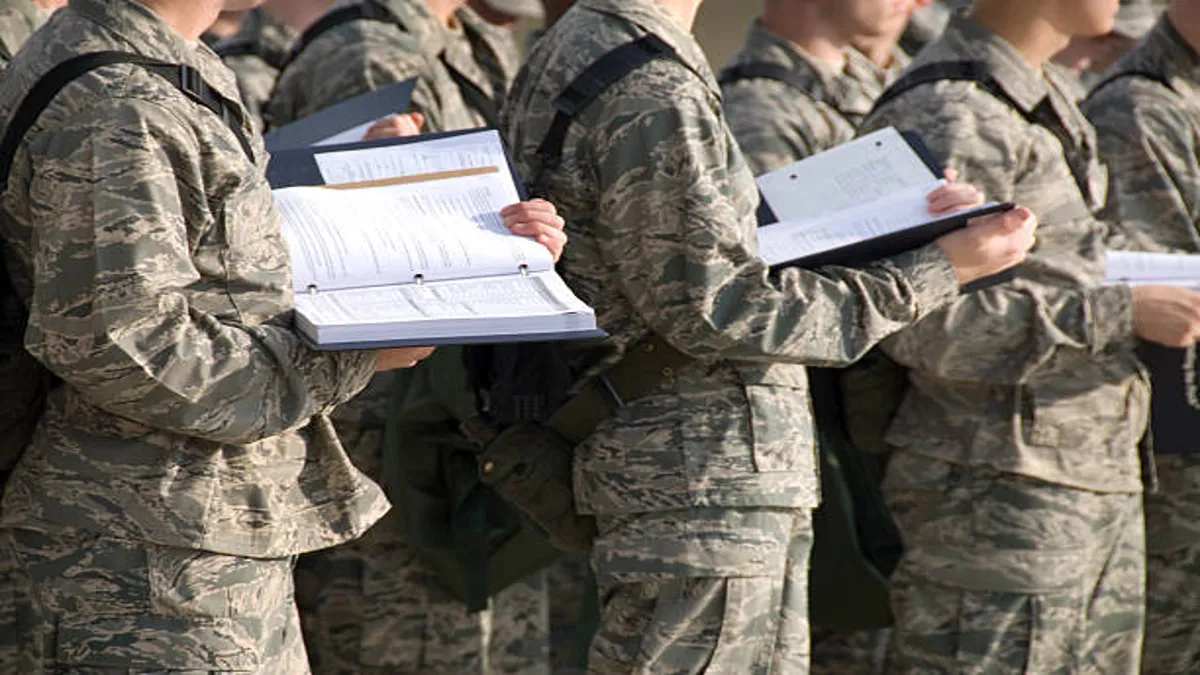
“Air Force Academy civilian faculty resignations” reflect a growing concern that extends beyond staffing numbers and into the heart of how the U.S. Air Force Academy educates future officers. Over the past year, dozens of civilian instructors—many holding advanced degrees and long-term teaching or research roles—have departed the Academy through resignations, early retirements, non-renewals, or voluntary separation programs tied to Department of Defense workforce reductions. For readers seeking clarity, the essential issue is not whether resignations occurred, but why they happened and what they signal about the Academy’s academic direction.
Civilian faculty have long played a stabilizing role at USAFA. Unlike military instructors who rotate in and out based on operational needs, civilian professors provide continuity in curricula, research mentorship, and accreditation compliance. Their presence helps ensure that the Academy meets the same academic standards as civilian universities while fulfilling its military mission. The recent wave of departures has therefore raised alarms among former instructors, alumni, and external observers who worry about the long-term impact on instructional quality and institutional credibility. -air force academy civilian faculty resignations.
The resignations did not occur in isolation. They unfolded alongside federal budget pressures, Pentagon-wide civilian workforce reductions, and internal restructuring at USAFA. Academy leadership maintains that academic excellence remains intact and that military faculty can absorb teaching responsibilities. Critics counter that replacing civilian scholars with rotating uniformed personnel alters the intellectual balance of the institution. Understanding these competing narratives requires examining the scale of departures, their institutional causes, and the broader implications for military education.
Scope and Scale of Civilian Faculty Departures
The most striking feature of the recent resignations is their concentration within a short time frame. Reports indicate that more than 25 civilian faculty members left the Air Force Academy in a single year, with some sources citing higher numbers when including instructors who departed earlier amid uncertainty about future staffing. While these figures represent a small percentage of the Academy’s total civilian workforce, their impact is magnified by the specialized nature of academic roles.
Civilian instructors often teach foundational courses in engineering, science, humanities, and social sciences—areas critical to accreditation and degree legitimacy. When multiple faculty members depart from the same department, remaining instructors face heavier teaching loads, reduced research capacity, and diminished mentorship opportunities for cadets. Even when classes continue uninterrupted, the institutional strain can be significant. -air force academy civilian faculty resignations.
Academy officials emphasize that not all identified cuts were filled positions and that voluntary separation programs allowed some faculty to exit on favorable terms. Still, the pace of departures created uncertainty within departments and fueled concerns that additional resignations could follow. The perception of instability, as much as the numerical loss, has shaped the broader debate.
Budget Policy and Workforce Restructuring
At the center of the resignations lies federal personnel policy rather than isolated managerial decisions. The Department of Defense has pursued civilian workforce reductions across multiple installations to address budget constraints and realign priorities. USAFA identified a significant number of civilian positions for defunding, triggering voluntary resignation and early retirement programs.
From an administrative standpoint, these measures were presented as fiscally responsible adjustments. Academy leadership stressed that workforce reductions were coordinated with higher headquarters and that employees were given options rather than abrupt terminations. This framing positions the resignations as part of a systemic policy environment rather than a rejection of civilian faculty contributions.
Yet policy-driven explanations do not fully address faculty concerns. Several departing instructors described uncertainty about contract renewals, limited transparency in decision-making, and a sense that academic roles were becoming secondary to operational considerations. Even when exits were technically voluntary, the surrounding conditions led some faculty to conclude that long-term academic careers at the Academy were no longer secure. -air force academy civilian faculty resignations.
Civilian Faculty Perspectives and Morale
Accounts from departing civilian instructors reveal the human dimension of institutional change. Some faculty joined USAFA after leaving tenure-track positions elsewhere, drawn by the Academy’s mission and resources. Their resignations, therefore, reflect not only professional disruption but personal disappointment.
Former instructors have described feeling undervalued as academic contributors, particularly when positions were eliminated without direct reference to teaching performance or scholarly output. For many, the loss of predictability—rather than immediate job loss—proved decisive. In academic careers, long-term planning is essential, and uncertainty about institutional commitment can be as destabilizing as direct cuts.
These experiences have affected morale among remaining faculty. Even those not directly impacted by reductions have reported increased anxiety about future staffing decisions. Such conditions can influence retention, recruitment, and the willingness of scholars to invest in long-term research or curriculum development at the Academy. -air force academy civilian faculty resignations.
Accreditation and Academic Oversight
The civilian faculty resignations have also drawn attention from external accrediting bodies. Accreditation depends on demonstrating that courses are taught by qualified instructors and that academic programs maintain stability and rigor. Significant shifts in faculty composition—especially when involving departures of doctoral-level scholars—can trigger scrutiny.
Oversight agencies have requested clarification from the Academy regarding how it plans to sustain academic standards amid workforce changes. While no accreditation loss has occurred, the inquiry itself underscores the seriousness of the situation. Accreditation is not merely symbolic; it affects degree recognition, institutional reputation, and the Academy’s standing within higher education.
Academy leadership has responded by reaffirming commitments to academic excellence and outlining measures to ensure qualified instruction. However, accreditation bodies evaluate not only assurances but structural capacity. Sustained reliance on rotating military instructors, while valuable in certain contexts, raises questions about long-term academic continuity.
Civilian and Military Faculty: A Delicate Balance
The Air Force Academy’s educational model relies on a blend of civilian and military instructors. Military faculty bring operational experience and leadership insights that are central to officer development. Civilian faculty contribute disciplinary depth, research continuity, and pedagogical stability.
The recent resignations have reignited debate over this balance. Supporters of restructuring argue that military instructors are fully capable educators and that integrating operational expertise enhances relevance. Critics counter that frequent rotations limit scholarly continuity and place additional burdens on faculty who must repeatedly redesign courses. -air force academy civilian faculty resignations.
This debate reflects a deeper philosophical question: whether service academies should function primarily as training institutions or as universities with a military mission. Civilian faculty resignations have become a proxy for that unresolved tension.
Expert Assessments of Institutional Impact
Higher education analysts note that institutions with dual missions face unique vulnerabilities during periods of fiscal adjustment. When budget policy collides with academic staffing, the effects can ripple outward, affecting morale, recruitment, and external perception.
Defense education specialists emphasize that civilian scholars are not interchangeable with military instructors, even when both are capable teachers. Each group fulfills distinct roles within the academic ecosystem. Accreditation experts similarly caution that sustained reductions in civilian faculty can raise red flags if not offset by demonstrably equivalent qualifications and stability. air force academy civilian faculty resignations.
These assessments suggest that the resignations are not merely an internal personnel matter but a governance issue with implications for educational quality and institutional trust.
Timeline of Key Developments
| Period | Development |
|---|---|
| Early Year | DoD civilian workforce reduction policies announced |
| Mid Year | USAFA identifies civilian positions for defunding |
| Following Months | Voluntary resignations, retirements, and non-renewals increase |
| Later Period | Accrediting body requests information on faculty stability |
This progression illustrates how policy decisions translated into tangible institutional effects.
Takeaways
• Civilian faculty resignations at USAFA are tied to broader DoD workforce reduction policies.
• Departures have a disproportionate academic impact due to faculty specialization and continuity roles.
• Faculty morale and recruitment are affected by perceived instability.
• Accrediting bodies are monitoring the situation closely.
• The resignations highlight ongoing tension between military training priorities and academic identity.
• Long-term outcomes depend on how effectively USAFA balances civilian and military instructional roles.
Conclusion
The recent civilian faculty resignations at the U.S. Air Force Academy reveal more than a momentary staffing challenge. They expose the fragile equilibrium between fiscal policy, academic standards, and institutional mission within one of the nation’s most prestigious military schools. While Academy leadership emphasizes adaptation and continuity, the concerns voiced by departing faculty and external observers suggest that the issue resonates deeply within the academic community.
How USAFA responds will shape its educational future. Sustaining academic excellence requires more than filling classrooms; it depends on stability, scholarly depth, and trust between institution and faculty. As defense policy and higher education continue to intersect, the Academy’s experience offers a cautionary case study in managing change without eroding the foundations of academic credibility.
FAQs
Why are civilian faculty resigning from the Air Force Academy?
Resignations are linked to voluntary separation programs, budget-driven workforce reductions, and uncertainty about long-term academic roles.
How many civilian faculty have left?
Reports indicate at least several dozen departures over a short period, though exact counts vary by definition and timing.
Are cadet programs being cut?
The Academy states that academic majors remain intact, though faculty workloads have shifted.
Is accreditation at risk?
No loss has occurred, but accrediting bodies have requested information due to faculty turnover.
Will military faculty replace civilians permanently?
Military instructors are filling some gaps, but the long-term balance remains under discussion.
References
- Air & Space Forces Association. (2025, August 20). Air Force Academy keeps majors intact amid faculty cuts. Air & Space Forces Magazine.
https://www.airandspaceforces.com/air-force-academy-majors-intact-faculty-cuts/ - Higher Learning Commission. (2024). Criteria for accreditation and faculty qualifications.
https://www.hlcommission.org/Policies/criteria-for-accreditation.html - Inside Higher Ed. (2025, June 23). Academic freedom was already limited at U.S. service academies.
https://www.insidehighered.com/news/faculty-issues/academic-freedom/2025/06/23/academic-freedom-service-academies-dissipates-under - KOAA News5. (2025, June 30). Sources: Over 50 civilian instructors have already left Air Force Academy with no replacements.
https://www.koaa.com/advocates-of-accountability/sources-over-50-civilian-instructors-have-already-left-air-force-academy-with-no-replacements-more-feared - KOAA News5. (2025, August 15). Air Force Academy civilian professor speaks out after resignation as leadership attempts to fill vacancies.
https://www.koaa.com/advocates-of-accountability/air-force-academy-civilian-professor-speaks-out-after-resignation-as-leadership-attempts-to-fill-vacancies - KOAA News5. (2025, October). National accrediting agency gives Air Force Academy 30 days to respond to complaint.
https://www.koaa.com/advocates-of-accountability/national-accrediting-agency-gives-air-force-academy-30-days-to-respond-to-complaint - U.S. Air Force Academy. (2025). U.S. Air Force Academy adapts to civilian workforce reduction, maintains academic excellence.
https://www.usafa.edu/u-s-air-force-academy-adapts-to-civilian-workforce-reduction-maintains-academic-excellence/ - U.S. Department of Defense. (2024). Civilian workforce shaping and voluntary separation authorities.
https://www.defense.gov/News/Releases/Release/Article/3845096/ - U.S. Government Accountability Office. (2023). Higher education oversight and federal academic workforce management.
https://www.gao.gov/education