
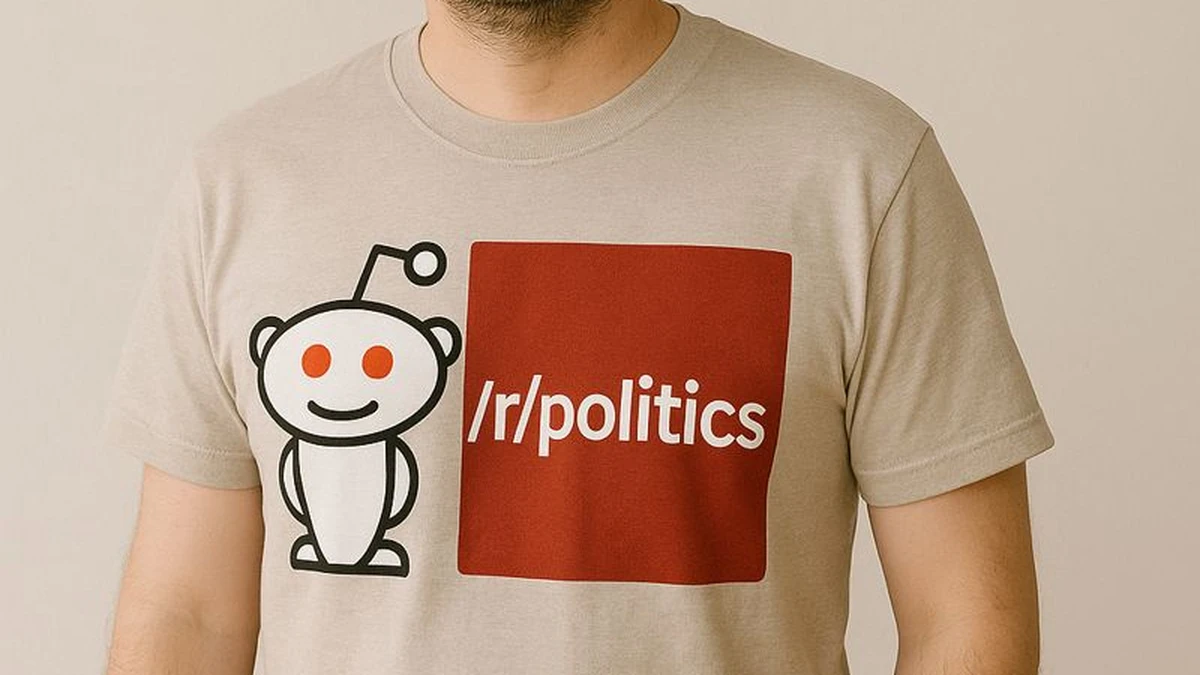
r/politics is one of the most active political discussion spaces on the internet, functioning as a continuously updating stream of political news, commentary, and public reaction centered largely on United States governance and elections. For readers seeking a direct answer, r/politics is a Reddit community where users post links to political reporting and discuss them through comments, votes, and moderation systems that collectively determine visibility and influence. Unlike a traditional newsroom or editorial board, the subreddit operates through participatory ranking, meaning that what readers see is shaped as much by collective user behavior as by journalistic output.
The significance of r/politics lies not only in its size but in what it represents: a digital public square where political identity, media consumption, and online culture intersect. Millions of users encounter headlines there before seeing them on television or newspapers, and comment threads often become rapid-response focus groups reacting to legislative developments, court rulings, elections, and political scandals. During moments of national tension, activity surges, revealing how closely online political conversation mirrors offline events.
At the same time, r/politics exposes the structural tensions inherent in social media–driven discourse. Voting systems reward popular sentiment, moderation decisions shape acceptable boundaries, and demographic skews influence which viewpoints dominate. Understanding r/politics therefore means understanding how modern political engagement functions when filtered through platforms designed for speed, participation, and algorithmic sorting rather than deliberation. This article examines the subreddit’s origins, rules, users, influence, and limitations to clarify what r/politics reveals about political conversation in the digital age.
The Emergence of r/politics Within Reddit
Reddit was founded in 2005 as a platform organized around topic-specific communities called subreddits. From early on, politics became one of the most discussed subjects on the site, leading to the growth of r/politics as a centralized forum for political content. As Reddit’s overall traffic expanded, r/politics benefited from network effects, drawing in users seeking a single destination for political headlines and debate rather than scattered discussions across smaller forums.
Over time, r/politics became closely associated with U.S. national politics. Its prominence rose sharply during presidential election cycles, particularly as social media increasingly replaced traditional media as a primary entry point for political news. Unlike partisan forums that explicitly cater to ideological groups, r/politics positioned itself as a general political subreddit, though critics and researchers have noted persistent ideological leanings in its dominant content.
The subreddit’s growth reflects a broader shift in how political information circulates. Rather than passively consuming news, users actively select, rank, and reinterpret it. This participatory model blurs the line between audience and curator, turning political news into a shared, contested experience shaped by collective behavior.
Rules, Governance, and Moderation Structures
r/politics operates under a detailed set of community rules designed to maintain topical focus and prevent the forum from devolving into abuse or irrelevance. Posts must concern current political events, typically requiring publication within a recent time window, and must relate directly to governance, public policy, or political actors. Opinion pieces and sensational content are often scrutinized, while overt hate speech and calls for violence are prohibited.
Moderation is carried out by volunteer moderators who interpret and enforce these rules. This system reflects Reddit’s broader governance model, where unpaid community members wield significant power over discourse. While this approach allows for contextual decision-making, it also invites controversy. Accusations of inconsistent enforcement or ideological bias frequently surface, particularly when high-profile posts are removed or locked.
Scholars studying online moderation note that such systems inevitably shape discourse by defining acceptable boundaries. In r/politics, moderation decisions influence not only what content remains visible but also how users self-censor or adapt their language to avoid removal. The result is a community whose tone and scope are continually negotiated between users, moderators, and platform norms.
Who Uses r/politics and Why It Matters
The demographic profile of r/politics users differs from that of the general population. Research on Reddit audiences consistently finds a user base that skews younger, more male, and more digitally literate than average. Politically, these users are more likely to identify with progressive or liberal viewpoints, a factor that shapes which stories gain traction and how discussions unfold.
These demographics matter because they influence collective interpretation of political events. When a community shares similar generational experiences and ideological leanings, consensus can form quickly, sometimes at the expense of minority viewpoints. Dissenting comments may be downvoted into obscurity, reinforcing the perception of unanimity even when broader public opinion is more divided.
At the same time, r/politics attracts users motivated by a desire for participation rather than passive consumption. Many engage not only to read news but to argue, persuade, or express frustration. This emotional investment contributes to the subreddit’s intensity, transforming political events into shared experiences marked by outrage, humor, cynicism, or hope.
The Mechanics of Visibility and Power
At the heart of r/politics lies Reddit’s voting system. Upvotes and downvotes determine which posts appear at the top of the subreddit and which comments are most visible. In theory, this democratizes content selection by allowing users to collectively surface valuable information. In practice, it also amplifies majority sentiment and emotional resonance.
Posts that align with the community’s prevailing views or that frame issues in compelling ways tend to rise quickly. Conversely, nuanced or contrarian perspectives may struggle to gain visibility, regardless of their factual merit. Comment sections often reflect this dynamic, with highly upvoted remarks reinforcing dominant narratives while dissent is marginalized.
This system grants users significant power over discourse but also introduces feedback loops. As certain viewpoints become more visible, they attract like-minded participants, further entrenching the community’s tone. Researchers describe this as an echo chamber effect, where exposure to diverse perspectives diminishes over time despite the appearance of open debate.
r/politics in the Broader Political Subreddit Network
r/politics does not exist in isolation. It is part of a wider network of political subreddits that range from ideologically explicit communities to issue-specific forums. Together, these spaces form what researchers often call the Reddit political ecosystem, where users migrate between communities based on interest, identity, or dissatisfaction.
Within this network, r/politics functions as a central hub. Breaking news often appears there first, then spreads outward to more specialized subreddits. Conversely, discussions originating in niche communities sometimes surface in r/politics when they gain wider relevance. This interconnectedness allows political narratives to travel rapidly across the platform.
The table below illustrates how r/politics compares to other political subreddits in structure and scope.
| Dimension | r/politics | Ideological subreddits |
|---|---|---|
| Scope | Broad U.S. political news | Narrow ideological focus |
| User base | Large and diverse | Smaller, more homogeneous |
| Moderation goals | Relevance and civility | Ideological consistency |
| Visibility | High platform prominence | Limited to subscriber base |
This positioning gives r/politics disproportionate influence over how political content is framed and encountered on Reddit as a whole.
Content Patterns and News Cycles
The content of r/politics closely tracks the rhythms of the political calendar. Election seasons produce spikes in activity, with daily threads dissecting polls, debates, and campaign strategies. Major Supreme Court decisions, legislative votes, or executive actions similarly trigger waves of posts and commentary.
During such moments, the subreddit becomes a real-time archive of public reaction. Comment threads capture immediate emotional responses that differ markedly from traditional opinion columns or editorials. This immediacy gives r/politics a sense of authenticity, but it also favors speed over reflection.
Researchers studying online political discussion observe that rapid engagement can intensify polarization. As users react quickly, emotionally charged framing often outperforms measured analysis. Over time, this can skew collective understanding, privileging narratives that provoke strong reactions rather than those that offer comprehensive context.
Expertise, Authority, and Credibility
Unlike professional newsrooms, r/politics does not confer authority through credentials. Expertise emerges through performance: users who consistently post accurate information, cite sources, or articulate persuasive arguments gain informal credibility. Others may challenge them, leading to public vetting through comment debate.
This decentralized model has strengths and weaknesses. On one hand, it allows knowledgeable individuals outside traditional institutions to contribute meaningfully. On the other, it can elevate confident but misinformed voices, particularly when their claims resonate emotionally with the community.
Communication scholars argue that this tension reflects a broader transformation in how authority functions online. Trust is earned through visibility and engagement rather than institutional affiliation. r/politics exemplifies this shift, revealing how political knowledge is negotiated collectively rather than transmitted hierarchically.
Polarization and the Limits of Deliberation
Despite its aspiration to host broad political discussion, r/politics frequently confronts accusations of ideological homogeneity. Studies of comment patterns and voting behavior suggest that dominant viewpoints receive reinforcement, while alternative perspectives face structural disadvantages.
This does not mean disagreement is absent. Comment sections often contain heated arguments, sarcasm, and rebuttals. However, the overall direction of discourse tends to converge around shared assumptions. Over time, this convergence can narrow the range of acceptable opinions, discouraging participation from those who feel out of step with the majority.
The challenge mirrors broader concerns about social media and democracy. Platforms designed for engagement and growth may unintentionally prioritize conflict and conformity over deliberation. r/politics thus serves as a microcosm of the difficulties inherent in sustaining pluralistic discussion within algorithmically mediated environments.
Cultural Impact Beyond Reddit
The influence of r/politics extends beyond the platform itself. Screenshots of popular threads circulate on other social media sites, and journalists sometimes reference Reddit discussions as indicators of public sentiment. Political campaigns and advocacy groups monitor online forums to gauge reactions and test messaging.
This spillover effect underscores the subreddit’s role as a barometer of digitally engaged opinion rather than a representative sample of the electorate. Its discussions reflect the priorities and emotions of a specific demographic slice, yet they can shape narratives that reach wider audiences.
Understanding this distinction is crucial. Treating r/politics as a proxy for national opinion risks misinterpretation, but ignoring it overlooks a significant arena where political meaning is actively produced and contested.
The Emotional Economy of r/politics
Emotion plays a central role in r/politics. Anger, fear, humor, and solidarity all circulate through posts and comments, shaping engagement patterns. Content that evokes strong feelings often rises faster than purely informational material.
This emotional economy has consequences. While it can foster community and shared purpose, it can also exacerbate burnout and cynicism. Long-time users sometimes describe cycles of intense engagement followed by withdrawal, reflecting the psychological toll of constant exposure to political conflict.
Media psychologists suggest that recognizing these dynamics is essential for healthy participation. r/politics offers connection and validation, but it also demands emotional labor from its users, blurring the line between civic engagement and personal stress.
Takeaways
- r/politics is a central hub for U.S. political discussion on Reddit.
- Visibility is shaped by user voting and volunteer moderation.
- Demographics skew younger, male, and more liberal than the general population.
- Emotional resonance strongly influences which content rises.
- The subreddit amplifies both participation and polarization.
- It functions as a digital public sphere with inherent structural limits.
Conclusion
r/politics illustrates how political discourse has adapted to the architecture of social media. It offers immediacy, participation, and collective interpretation, allowing users to engage with politics not as distant observers but as active contributors. In doing so, it captures the energy and volatility of contemporary civic life.
Yet the same features that make r/politics compelling also constrain it. Voting systems favor majority sentiment, moderation shapes boundaries, and demographic skews limit representativeness. Rather than replacing traditional public forums, r/politics complements them, providing insight into how digitally connected citizens process political events in real time.
Understanding r/politics is therefore less about judging its correctness and more about recognizing its function. It is a mirror of online political culture, reflecting both democratic aspirations and structural challenges. As political engagement continues to migrate online, spaces like r/politics will remain crucial laboratories for understanding how democracy is practiced, argued, and felt in a networked society.
FAQs
What is r/politics?
It is a Reddit community focused on sharing and discussing current political news, primarily related to the United States.
Who moderates r/politics?
Volunteer moderators enforce community rules about relevance and acceptable behavior.
Is r/politics politically neutral?
While open to all users, discourse often reflects dominant viewpoints shaped by user demographics and voting behavior.
How do upvotes affect discussion?
Upvotes increase visibility, amplifying popular perspectives while marginalizing less favored ones.
Does r/politics influence real politics?
It can shape online narratives and media attention, though it does not represent the full electorate.
References
- Pew Research Center. (2016). Reddit news users more likely to be male, young and digital in their news preferences. https://www.pewresearch.org/journalism/2016/02/25/reddit-news-users-more-likely-to-be-male-young-and/
- Reddit. (n.d.). r/politics. https://www.reddit.com/r/politics/
- Hofmann, V., Schütze, H., & Pierrehumbert, J. B. (2022). The Reddit politosphere: A large-scale resource of online political discourse. Proceedings of the International AAAI Conference on Web and Social Media.
- University of Michigan Ross School of Business. (2024). Political bias and content moderation on Reddit. https://michiganross.umich.edu/news/new-study-reddit-explores-how-political-bias-content-moderation-feeds-echo-chambers
- Papakyriakopoulos, O., Engelmann, S., & Winecoff, A. (2023). Understanding reaction mechanisms and political discourse on Reddit. arXiv.