Cartetach sits at an increasingly important intersection of work, technology, and automation. For readers seeking clarity, the essential answer is straightforward: Cartetach is a workflow orchestration and automation platform designed to help teams connect systems, automate repetitive tasks, and maintain visibility over complex processes. It is not merely a task manager, nor is it a traditional project planning tool. Instead, it functions as an execution layer that coordinates how work actually moves from one step to the next.
The rise of Cartetach reflects a broader transformation in how organizations operate. As remote and hybrid work models became mainstream, teams adopted dozens of digital tools—calendars, messaging apps, storage systems, customer databases, and analytics dashboards. While each tool solved a specific problem, the result was fragmentation. Work became scattered, and employees were left to manually bridge gaps between systems.
Cartetach emerged as a response to that fragmentation. Rather than replacing existing tools, it connects them. Rather than focusing on static task lists, it emphasizes flow—what triggers a task, what happens after completion, and how information moves automatically across platforms. This approach reduces manual coordination and makes processes more predictable.
What makes Cartetach noteworthy is not a single feature but its philosophy. It treats work as a system, not a series of isolated actions. By doing so, it offers a lens into how modern organizations are rethinking productivity, accountability, and scale in a digital-first environment.
The Context That Gave Rise to Cartetach
Cartetach did not appear in a vacuum. Its development aligns with years of accumulated friction in digital work environments. Organizations layered tool upon tool in pursuit of efficiency, only to discover that coordination costs quietly grew alongside them. Every new application introduced another handoff, another notification, another manual update.
Workflow orchestration platforms arose as a corrective measure. They acknowledge that productivity is not just about doing tasks faster, but about reducing the gaps between tasks. Cartetach fits squarely into this evolution by positioning itself above individual applications, acting as a conductor rather than a performer.
Early adopters were often teams experiencing rapid growth. Startups scaling operations needed consistency without bureaucracy. Mid-sized organizations struggled with handoffs across departments. Even large enterprises began to recognize that legacy business process tools were powerful but often inaccessible to non-technical users. Cartetach’s emphasis on visual workflows and rule-based automation addressed these needs.
The platform’s emergence mirrors a cultural shift as well. Knowledge work increasingly values clarity over control. Rather than micromanaging tasks, leaders want systems that make progress visible and exceptions obvious. Cartetach’s design philosophy reflects this change.
What Workflow Orchestration Really Means
Workflow orchestration is often confused with project management, but the distinction matters. Project management focuses on planning and tracking: assigning tasks, setting deadlines, and reporting status. Orchestration focuses on execution: what happens automatically when conditions are met.
In a traditional system, when a task is completed, a person must decide what comes next. In an orchestrated system, that decision is pre-defined. Completion triggers notifications, updates records, or launches the next task without human intervention.
Cartetach is built around this logic. Users define workflows as sequences of actions governed by rules. These rules determine how tasks move, how data is shared, and how exceptions are handled. The result is less reliance on memory, fewer manual updates, and more consistent outcomes.
This approach reduces cognitive load. Instead of remembering who needs to be notified or which system needs updating, teams rely on the platform to handle routine transitions. Human attention is reserved for judgment, creativity, and problem-solving.
Core Capabilities of the Platform
Cartetach combines several capabilities into a single orchestration layer, each reinforcing the others.
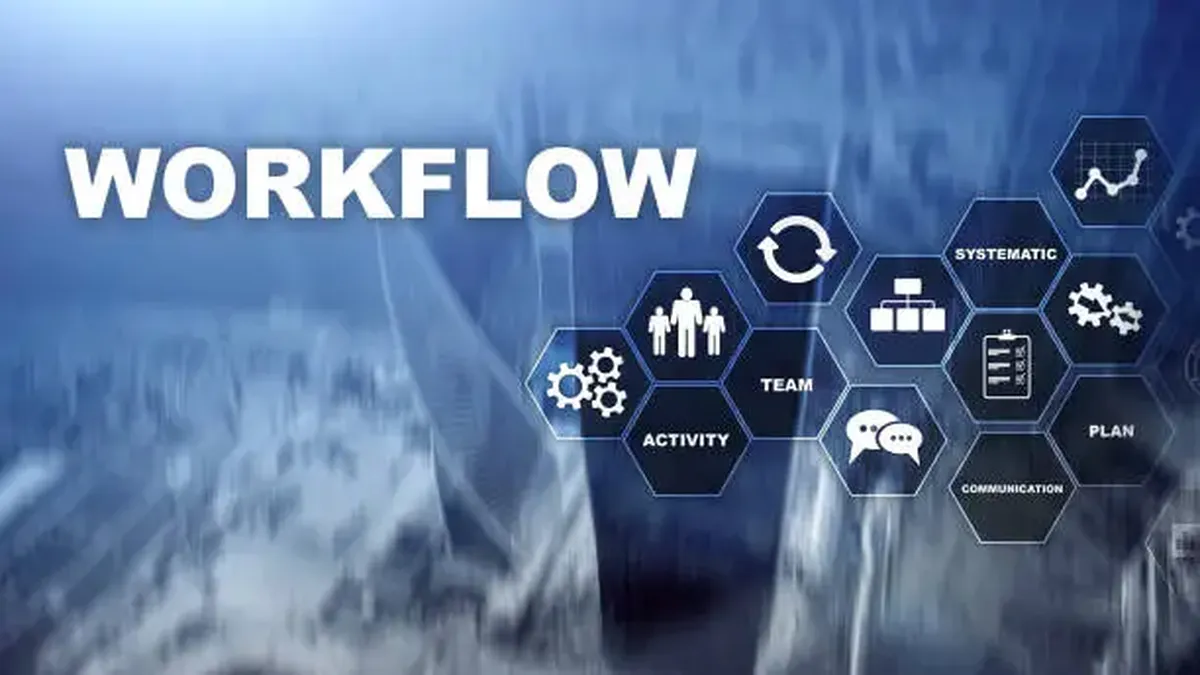
Workflow visualization allows teams to see processes as living systems rather than static lists. Dependencies, stages, and bottlenecks become visible at a glance, enabling better planning and intervention.
Automation rules form the engine of the platform. Triggers, conditions, and actions define how work flows. A completed form might create a task, notify a stakeholder, and update a database automatically.
Integrations extend Cartetach’s reach. By connecting with existing tools—communication platforms, storage services, and internal systems—it avoids becoming yet another silo.
Real-time dashboards provide oversight without intrusion. Leaders can see progress and workload distribution without constant check-ins, supporting autonomy while maintaining accountability.
Audit trails add transparency. Every change is recorded, which supports compliance requirements and helps teams understand how decisions were made.
Together, these capabilities position Cartetach as infrastructure rather than interface—a system that supports work quietly in the background.
How Cartetach Operates in Practice
Using Cartetach typically begins with identifying a process rather than a project. A team maps how work currently flows, noting where delays, errors, or redundancies occur. This map becomes the foundation for automation.
The workflow is then translated into a visual sequence within the platform. Each step is defined not just by who is responsible, but by what conditions allow it to proceed and what outcomes it produces.
Once activated, the workflow runs continuously. When an event occurs—a task completion, a form submission, a missed deadline—the system responds immediately. Notifications are sent, records are updated, and next steps are initiated without waiting for manual intervention.
Importantly, workflows are not fixed. Cartetach allows teams to refine logic over time, adjusting rules as processes evolve. This adaptability ensures that automation supports work rather than constraining it.
Where Cartetach Is Used
Cartetach’s design makes it applicable across many domains, unified by the need to coordinate complex processes.
Marketing teams use it to automate campaign lifecycles, ensuring approvals, launches, and reporting happen on schedule. Development teams integrate it into software pipelines to manage reviews and testing handoffs. Sales teams rely on automated lead routing and follow-ups to reduce response times.
Human resources departments use orchestration to standardize onboarding, ensuring documents, training, and access provisioning occur in the correct order. Administrative teams apply similar logic to procurement, scheduling, and compliance workflows.
Across these use cases, the value is consistent: fewer dropped handoffs, clearer ownership, and reduced administrative overhead.
Comparison With Other Work Tools
| Dimension | Cartetach | Basic Task Tools | Enterprise BPM Systems |
|---|---|---|---|
| Automation | High | Low | High |
| Ease of Use | Moderate to High | High | Low |
| Integrations | Broad | Limited | Broad |
| Flexibility | High | Moderate | Rigid |
| Setup Time | Moderate | Low | High |
This comparison highlights Cartetach’s position between simplicity and power. It offers automation without the complexity often associated with enterprise-grade process management systems.
Expert Observations
Specialists in digital productivity often note that orchestration platforms address a structural problem rather than a behavioral one.
One productivity analyst observes that automation works best when it removes decisions people should not be making repeatedly. Another consultant emphasizes that visual workflows create shared understanding across teams, reducing miscommunication. A transformation strategist points out that integration, not replacement, is the key to adoption in modern organizations.
These perspectives align with Cartetach’s design choices and help explain its appeal.
Challenges and Limitations
Despite its strengths, Cartetach is not without challenges. Adoption requires a shift in mindset from reactive task handling to proactive process design. Teams must invest time upfront to map workflows accurately.
Integration with highly customized systems can demand technical expertise. While the platform reduces manual work, it does not eliminate the need for thoughtful governance, especially when sensitive data is involved.
Training is another consideration. While basic workflows are accessible, advanced logic benefits from structured onboarding. Organizations that underestimate this learning curve may fail to realize the platform’s full value.
The Broader Direction of Work Orchestration
Cartetach represents a step toward more intelligent work systems. Future developments are likely to include adaptive automation that suggests improvements, predictive alerts that identify risks early, and deeper personalization of workflows.
As artificial intelligence becomes embedded in orchestration platforms, systems may evolve from executing rules to learning from outcomes. In that future, tools like Cartetach will not just manage work—they will help shape it.
Takeaways
- Cartetach is a workflow orchestration and automation platform
- It connects existing tools rather than replacing them
- Automation reduces manual handoffs and cognitive load
- Visual workflows improve clarity and accountability
- Adoption requires process thinking, not just tool usage
- The platform reflects broader shifts in digital work design
Conclusion
Cartetach’s significance lies not only in what it does, but in what it represents. It reflects a growing recognition that productivity challenges are often systemic rather than individual. By focusing on how work flows—how tasks begin, transition, and conclude—it offers an alternative to fragmented digital environments.
As organizations continue to navigate distributed work and increasing complexity, orchestration platforms will play a central role. Cartetach illustrates how automation, when thoughtfully applied, can support human judgment rather than replace it.
In the long arc of workplace technology, tools like Cartetach mark a shift away from managing tasks toward designing systems. That shift may ultimately prove to be one of the most consequential changes in how modern work is understood and executed.
FAQs
What is Cartetach used for?
It is used to automate and coordinate workflows across multiple tools and teams.
Is Cartetach a project management tool?
Not exactly; it focuses on execution and automation rather than planning alone.
Who benefits most from Cartetach?
Teams managing complex, repetitive, or cross-system workflows.
Does Cartetach replace existing software?
No, it integrates with existing tools to orchestrate how they work together.
Is technical expertise required?
Basic workflows are accessible, but advanced integrations may require support.
References
- Gartner, Inc. (2024). Workflow orchestration and automation platforms: Market overview and trends. https://www.gartner.com/en/information-technology
- McKinsey & Company. (2023). Automation, orchestration, and the future of work. https://www.mckinsey.com/capabilities/operations/our-insights
- Harvard Business Review. (2022). How workflow automation changes the way teams work. https://hbr.org
- IBM. (2024). Business process orchestration and intelligent automation. https://www.ibm.com/automation
- Forrester Research. (2023). The rise of work orchestration platforms in digital enterprises. https://www.forrester.com