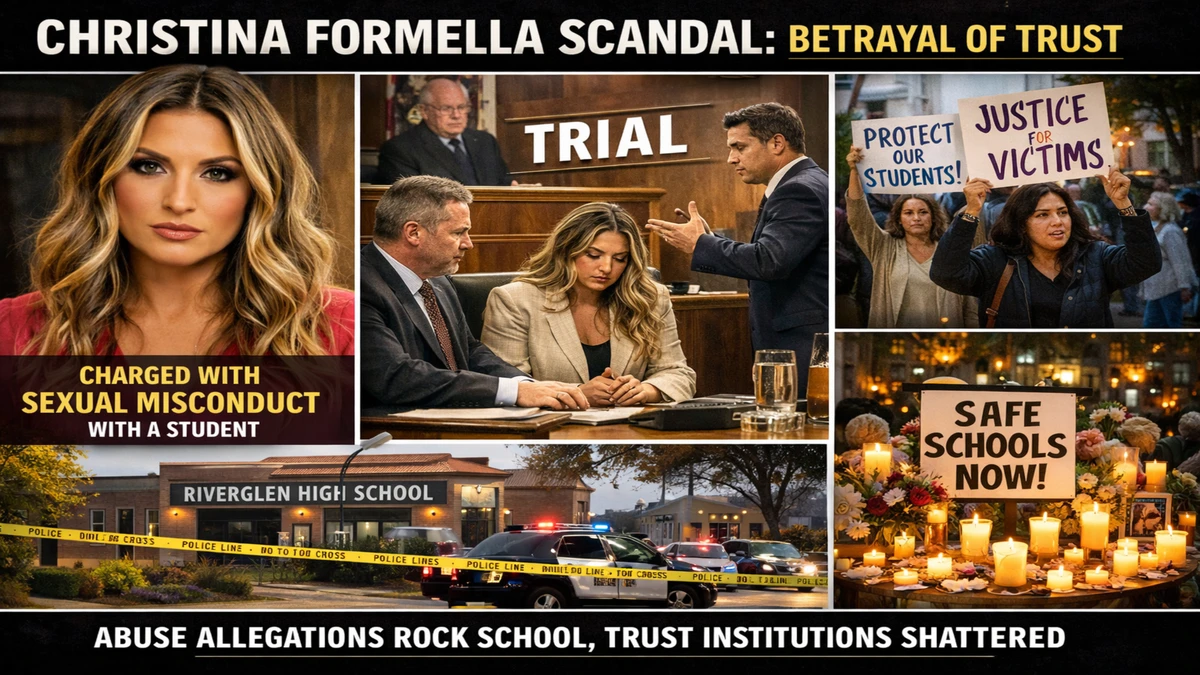
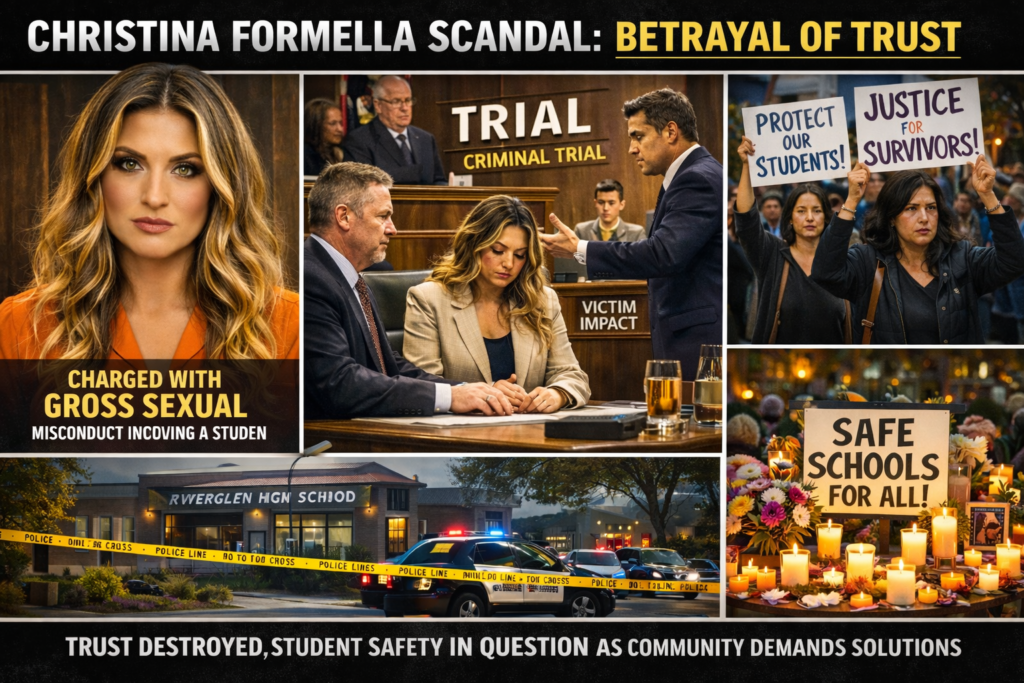
In the spring of 2025, Christina Formella name moved abruptly from school newsletters and soccer schedules into court dockets and national headlines. A special education teacher and high school coach in Downers Grove, Illinois, she had been trusted with students who needed support, guidance, and stability. Then she was arrested and charged with sexually abusing a teenage student, accused of grooming and exploiting a position of authority over nearly two years. The case stunned her community not only because of the severity of the allegations, but because of who they involved: an educator whose job was to protect.
The accusations against Formella exposed a painful contradiction at the heart of modern schooling. Schools are places where children are expected to be safe, and teachers are among the most trusted adults in a child’s life outside the family. When that trust is allegedly broken, the harm extends far beyond the individual victim. It ripples through families, classrooms, and entire communities, leaving behind fear, anger, and a lingering sense that something foundational has been violated.
According to prosecutors, the alleged abuse began when the student was fourteen and continued into his fifteenth year, occurring during tutoring sessions, on school grounds, and at Formella’s home. Digital messages and witness testimony form the backbone of the state’s case. A grand jury later expanded the charges dramatically, transforming what began as a shocking arrest into one of the most closely watched abuse prosecutions in Illinois that year. – christina formella.
This article reconstructs the case from its emergence to its broader implications. It traces Formella’s professional background, the discovery of the alleged abuse, the legal process now unfolding, and the community response that followed. It also situates the case within a wider conversation about safeguarding, power, and accountability in educational institutions.
Early Career and Public Image
Before her arrest, Christina Formella was known primarily as a teacher and coach. She worked in special education, a field that requires patience, emotional intelligence, and professional discipline. Colleagues described her as organized and engaged. Parents recognized her name from report cards, parent-teacher conferences, and after-school sports activities.
This public image is not incidental to the story. Abuse in institutional settings often depends on a foundation of trust. The more a person is perceived as reliable, caring, and responsible, the less likely others are to question their behavior. In Formella’s case, prosecutors argue that this trust created an opportunity for exploitation. Her role as both tutor and coach meant frequent one-on-one contact with students, often outside the presence of other adults.
After her arrest, Formella was removed from her position and later resigned. Her teaching license was surrendered as the case advanced. The contrast between her former public role and her current legal status became a central tension in media coverage and community discussion.
Discovery of the Alleged Abuse
The case came to light when the alleged victim’s mother discovered explicit messages on her son’s phone. These communications, prosecutors say, revealed a relationship that was sexual, inappropriate, and illegal. The mother reported her findings to police, triggering an investigation that moved quickly.
Within days, authorities arrested Formella during a traffic stop. The arrest itself was dramatic, involving her husband and taking place in full view of the public. Initial charges included aggravated criminal sexual abuse and criminal sexual assault.
The speed of the arrest reflected both the seriousness of the allegations and the availability of digital evidence. Text messages, photographs, and notes stored on devices now play a central role in modern criminal cases, particularly in cases involving grooming, where patterns of communication can demonstrate intent and escalation over time.
Legal Escalation and Expanded Charges
What began as a case with several charges soon expanded into something much larger. A grand jury returned an indictment adding more than fifty additional counts, including repeated instances of aggravated sexual abuse, grooming, and indecent solicitation of a minor.
Prosecutors allege that the abuse was not a single incident but a sustained pattern occurring dozens of times over nearly two years. The locations described include school property, tutoring sessions, and private spaces, each carrying its own legal and ethical weight.
The court imposed strict conditions on Formella’s release while awaiting trial. She was prohibited from contacting minors, restricted from entering school property, and subject to electronic monitoring. The judge declined to detain her pretrial, citing legal standards governing pretrial liberty, but emphasized the need to protect the alleged victim and the public.
If convicted on all counts, Formella could face decades in prison.
Read: Minneapolis Shooting 2025: What Happened and Why It Matters
Community Shock and Moral Reckoning
Downers Grove is a suburban community that prides itself on stable schools and family life. News of the allegations spread rapidly through parent groups, social media, and local news outlets. Many parents expressed disbelief, followed by anger and fear.
The emotional response was not limited to outrage. There was also grief for the alleged victim, concern for other students who might have been affected indirectly, and anxiety about whether warning signs had been missed. Some parents questioned school oversight policies. Others worried about how to talk to their children about what had happened.
Vigils were not held in the way they are after violent crime, but quiet conversations filled kitchens, school parking lots, and online forums. The scandal forced families to confront uncomfortable questions about who is safe, who is trustworthy, and how to teach children about boundaries without instilling fear.
Expert Perspectives
Dr. Helen Fisher, a child psychologist specializing in trauma, explains that abuse by a trusted authority figure often causes deeper psychological harm than abuse by a stranger. “The betrayal of trust disrupts a child’s understanding of safety and can affect relationships for years,” she says.
Professor Mark Reynolds, who studies education policy, points to structural issues. “Schools are designed for openness and accessibility. That makes them nurturing, but it also creates vulnerabilities. Oversight systems have to balance trust with accountability.”
Joanna Tate, director of a child protection nonprofit, emphasizes that grooming often looks harmless at first. “It can begin as extra attention, private tutoring, or emotional support. Without clear boundaries and training, those early signs can be missed.”
These perspectives underline that the Formella case is not just about one individual but about systems that failed to prevent or detect alleged harm.
Timeline of Key Events
| Date | Event |
|---|---|
| Early 2023 | Alleged grooming and abuse begins |
| March 2025 | Alleged victim’s mother contacts police |
| March 2025 | Formella arrested and charged |
| June 2025 | Grand jury adds more than 50 charges |
| Ongoing | Court proceedings continue |
Legal Charges Explained
| Charge | Meaning |
|---|---|
| Aggravated Criminal Sexual Assault | Sexual acts with a minor involving authority or coercion |
| Aggravated Criminal Sexual Abuse | Sexual contact with a minor |
| Grooming | Behavior intended to prepare a minor for exploitation |
| Indecent Solicitation of a Minor | Encouraging a minor to engage in sexual acts |
Broader Implications for Schools
The Formella case intensified calls for reform in how schools monitor teacher-student interactions. Proposals included clearer guidelines on private tutoring, stricter documentation of one-on-one sessions, enhanced training on recognizing grooming behavior, and easier reporting mechanisms for students.
Some educators worried that excessive surveillance could damage trust and make teachers hesitant to support students who genuinely need extra help. Others argued that transparency protects both students and teachers by creating clear boundaries and expectations.
The challenge lies in designing systems that prevent abuse without undermining the relational foundation of education.
Takeaways
- The allegations against Christina Formella involve abuse of a minor student over an extended period.
- The case escalated from a few charges to dozens after a grand jury indictment.
- Digital evidence played a central role in uncovering and prosecuting the alleged abuse.
- The community response combined shock, grief, and demands for accountability.
- Experts emphasize the need for both institutional safeguards and cultural awareness around grooming.
Conclusion
The Christina Formella case is not only a criminal proceeding but a moral and institutional crisis. It exposes how power, trust, and vulnerability intersect within schools, and how devastating the consequences can be when those dynamics are abused.
As the legal process unfolds, the community must navigate grief, anger, and the search for meaning. For policymakers and educators, the case is a warning and an opportunity: a warning about the harm that can occur when safeguards fail, and an opportunity to rethink how children are protected in environments built on trust.
Whether through stronger oversight, better training, or more open conversations about boundaries, the legacy of this case may be a renewed commitment to making schools places where trust is not blind, but earned, supported, and protected.
FAQs
Who is Christina Formella?
She is a former Illinois teacher accused of sexually abusing a student.
What is she charged with?
She faces charges including aggravated sexual assault, sexual abuse, grooming, and indecent solicitation of a minor.
When did the alleged abuse occur?
Prosecutors allege it occurred between 2023 and 2024.
Is the case resolved?
No. The case is ongoing, and Formella has not been convicted.
Why is this case significant?
It raises critical questions about trust, power, and safeguarding in schools.
References
- American Psychological Association. (2023). Child sexual abuse: What parents should know. https://www.apa.org/topics/child-abuse-neglect/child-sexual-abuse
- Centers for Disease Control and Prevention. (2024). Preventing child sexual abuse. https://www.cdc.gov/violenceprevention/childsexualabuse/index.html
- National Center for Missing & Exploited Children. (2024). Protecting children from sexual exploitation and abuse. https://www.missingkids.org/theissues/sexualabuse
- U.S. Department of Education. (2023). Sexual misconduct in education: Policy and prevention. https://www2.ed.gov/about/offices/list/ocr/docs/sexual-misconduct.html
- RAINN. (2024). Grooming: What it is and how to stop it. https://www.rainn.org/articles/grooming