
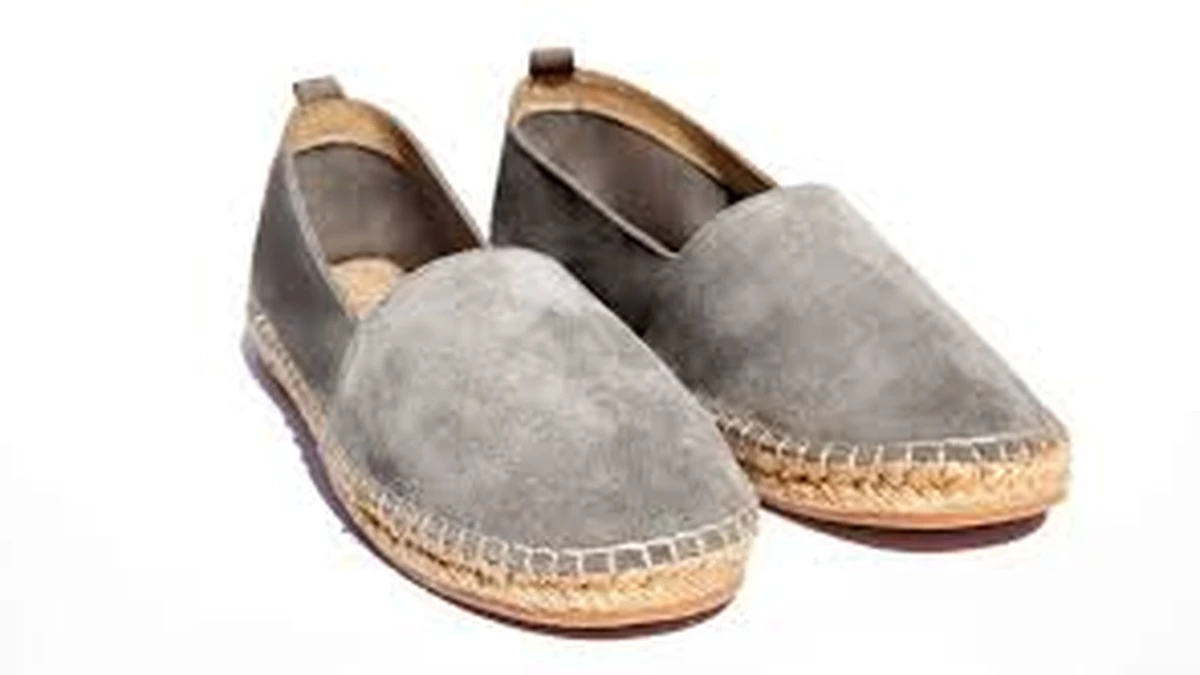
Espadrilhas known in English as espadrilles are among the rare objects that bridge necessity and elegance without losing their soul. At their core, they are simple shoes: canvas uppers stitched to braided jute soles. Yet within that simplicity lies centuries of history, labor, climate adaptation, and cultural identity. For readers searching to understand what espadrilhas are, where they come from, and why they persist, the answer is both practical and poetic. They were born of heat, poverty, and ingenuity along the Mediterranean, designed for workers who needed breathable footwear that could be made cheaply and repaired easily. Over time, they crossed borders, classes, and wardrobes, becoming symbols of summer ease and understated sophistication.
Today, espadrilhas occupy a curious space in global fashion. They are worn by farmworkers in rural Spain, vacationers along the Amalfi Coast, and models on Paris runways. Their appeal is not driven by technology or hype, but by continuity. The same basic construction used centuries ago still defines them, even as designers reinterpret shapes, materials, and colors. In an era of fast fashion and synthetic innovation, espadrilhas feel grounded literally and metaphorically in natural fibers and human hands.
Understanding espadrilhas means understanding how geography shapes design, how labor traditions survive modernization, and how fashion periodically returns to restraint. This article explores the origins, materials, cultural meanings, and modern reinventions of espadrilhas, tracing how a regional necessity became a global staple without losing its identity.
Origins in the Mediterranean World
The origins of espadrilhas are closely tied to the rural economies of the western Mediterranean, particularly northern Spain and southern France. The word itself derives from esparto, a tough Mediterranean grass historically used to make ropes, baskets, and soles. Early espadrilhas were constructed with hand-braided soles made from esparto or jute and simple fabric uppers, stitched together using minimal tools. This design answered a clear need: breathable footwear suited to hot climates and long hours of manual labor.
Historical records place espadrilhas in Catalonia and the Pyrenees as early as the 14th century. They were worn by peasants, fishermen, and soldiers, valued for their low cost and ease of repair. Unlike leather shoes, which were expensive and heavy, espadrilhas could be produced locally using available plant fibers. This localized production fostered regional styles, with variations in lacing, toe shape, and fabric depending on village and trade routes.
By the 18th and 19th centuries, espadrilhas had become standard footwear across much of Spain. Factories emerged in regions like La Rioja and Catalonia, scaling production while preserving traditional methods. Even as industrialization spread, the shoe’s basic form remained unchanged, anchored to its original function rather than fashion trends.
Materials and Craftsmanship
At the heart of espadrilhas is their material honesty. Traditional soles are made from jute, a natural fiber prized for its strength, flexibility, and breathability. The jute is twisted into cords, braided into flat lengths, and then coiled and stitched to form a sole. This process remains labor-intensive, often involving skilled artisans whose techniques are passed down through generations.
The uppers are typically made from cotton or canvas, chosen for comfort and ease of dyeing. Historically, these fabrics were undyed or lightly colored, reflecting local availability rather than aesthetic ambition. Stitching the upper to the sole is done by hand or with specialized machines, requiring precision to ensure durability without rigidity.
What distinguishes espadrilhas from many modern shoes is the absence of synthetic cushioning or complex structure. Comfort comes from flexibility and breathability rather than engineered support. This simplicity has become part of their appeal in contemporary markets, where consumers increasingly value natural materials and visible craftsmanship.
Fashion historian Elizabeth Semmelhack has noted that espadrilles “represent a rare continuity between peasant footwear and modern leisurewear, with materials and methods that resist obsolescence.” Such observations underscore why espadrilhas feel timeless rather than retro.
Espadrilhas and Social Class
For much of their history, espadrilhas were markers of class. They were associated with laborers and rural life, rarely worn by elites except in informal or coastal settings. This changed gradually in the 20th century, as leisure culture expanded and class boundaries in dress softened. The shoe’s association with summer, travel, and relaxation made it attractive to urban consumers seeking an escape from formality.
During the Spanish Civil War in the 1930s, espadrilhas were worn by soldiers on both sides, valued for their lightness and silence. This moment embedded them further into national memory, linking them to resilience and adaptability. After the war, as tourism along the Mediterranean grew, espadrilhas became souvenirs of place, carrying cultural meaning beyond utility.
The turning point in their class trajectory came mid-century, when artists, intellectuals, and eventually designers began wearing them publicly. What was once rural footwear entered cafés, studios, and beaches frequented by cultural elites. This shift did not erase their origins but reframed them, allowing espadrilhas to signify authenticity rather than poverty.
Entry into High Fashion
Espadrilhas’ entry into high fashion is often dated to the 1940s and 1950s, when European designers began incorporating them into summer collections. The most influential moment came when designers reimagined the flat shoe as a wedge, elevating both height and status. This adaptation preserved the jute sole while adding a sculptural element that appealed to fashion-conscious consumers.
Yves Saint Laurent famously collaborated with Spanish artisans in the 1970s to create espadrille wedges for his collections, cementing the shoe’s place on international runways. These designs maintained the essential materials while introducing bold colors and refined silhouettes. The collaboration demonstrated that traditional craft could coexist with haute couture without dilution.
Fashion editor Suzy Menkes once described espadrilles as “the rare shoe that carries history without heaviness,” a sentiment echoed by many designers who value their narrative depth. From that point forward, espadrilhas became seasonal fixtures in luxury and ready-to-wear markets alike.
Globalization and Regional Identity
As espadrilhas spread globally, questions of authenticity and origin followed. Production expanded beyond Spain and France, with factories emerging in Asia and South America. While this increased accessibility, it also raised concerns about the erosion of traditional craftsmanship.
In response, some regions sought to protect espadrilhas as cultural heritage. In Spain, particularly in La Rioja, manufacturers emphasize geographic identity and artisanal methods as points of distinction. Labels highlighting hand-stitched soles or locally sourced jute serve both as marketing and preservation strategies.
Anthropologist Daniel Miller has argued that global fashion objects succeed when they “remain legible to their place of origin while adaptable to new contexts.” Espadrilhas exemplify this balance. Even mass-produced versions reference the rope sole and canvas upper, visual cues that anchor them to Mediterranean tradition.
Construction Variations Over Time
| Era | Sole Material | Upper Style | Cultural Context |
|---|---|---|---|
| Medieval–18th c. | Esparto grass | Undyed canvas | Rural labor |
| 19th c. | Jute | Cotton, laced | Industrial villages |
| Mid-20th c. | Jute | Colored canvas | Leisure, tourism |
| Late 20th–21st c. | Jute + rubber | Fashion fabrics | Global fashion |
Espadrilhas Compared to Similar Footwear
| Footwear | Primary Material | Origin | Key Difference |
|---|---|---|---|
| Espadrilhas | Jute, canvas | Spain/France | Rope sole |
| Alpargatas | Canvas, rubber | South America | Vulcanized sole |
| Loafers | Leather | Europe | Structured, formal |
| Sandals | Leather/synthetics | Global | Open construction |
Sustainability and Contemporary Appeal
In the 21st century, espadrilhas have found renewed relevance through sustainability discourse. Their reliance on natural fibers, low-impact production, and biodegradability align with contemporary concerns about environmental impact. While not inherently sustainable at scale, traditional espadrilhas offer a model of restraint and material efficiency.
Designers and brands increasingly frame espadrilhas as eco-conscious choices, emphasizing artisanal production and reduced synthetic content. This narrative resonates with consumers seeking alternatives to plastic-heavy footwear. The shoe’s seasonal nature also limits overuse, reinforcing its association with mindful consumption.
Footwear researcher Rebecca Shaw notes that “espadrilles endure because they answer a climatic and cultural logic, not a technological one.” That logic continues to make sense in an age questioning excess.
Takeaways
- Espadrilhas originated as Mediterranean working shoes made from plant fibers.
- Their materials and construction emphasize breathability and simplicity.
- Social meaning shifted from labor footwear to leisure and fashion.
- High fashion adoption preserved craft while expanding visibility.
- Modern appeal is tied to sustainability and authenticity.
- Regional identity remains central despite global production.
Conclusion
Espadrilhas endure because they were never designed to impress, only to serve. That humility, paradoxically, is what allowed them to travel so far—from rural fields to fashion capitals—without losing coherence. In a world where footwear often promises innovation through complexity, espadrilhas remind wearers that comfort, beauty, and meaning can emerge from restraint. Their rope soles and canvas uppers carry the imprint of climate, labor, and time, offering not nostalgia but continuity. As fashion cycles accelerate, espadrilhas stand quietly apart, grounded in the knowledge that some designs do not need reinvention, only respect.
FAQs
What are espadrilhas?
Espadrilhas are rope-soled shoes traditionally made with jute soles and canvas uppers, originating in the Mediterranean.
Are espadrilhas the same as espadrilles?
Yes. “Espadrilhas” is the Portuguese and Spanish plural; “espadrilles” is the English term.
Why are jute soles important?
Jute provides breathability, flexibility, and biodegradability, defining the shoe’s character.
Can espadrilhas be worn daily?
They are best for dry weather and moderate use, as jute is sensitive to moisture.
Are espadrilhas sustainable?
Traditional versions using natural fibers are relatively low-impact, especially when artisan-made.
References
- Encyclopaedia Britannica. (2024). Espadrille. https://www.britannica.com/topic/espadrille
- Semmelhack, E. (2017). Shoes: The meaning of style. Bata Shoe Museum. https://batashoemuseum.ca
- Miller, D. (2010). Stuff. Polity Press. https://www.politybooks.com
- Fashion Institute of Technology. (2022). History of footwear. https://fashionhistory.fitnyc.edu
- Smithsonian National Museum of Asian Art. (2021). Textiles and natural fibers. https://asia.si.edu