
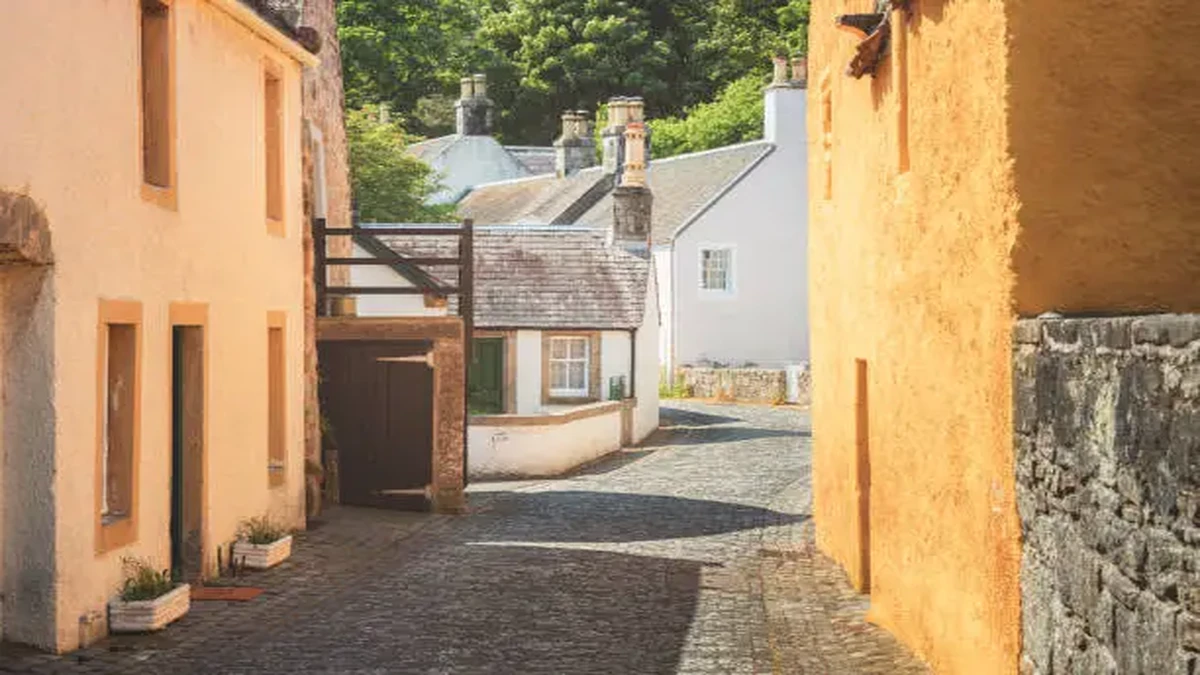
Luxury countryside living in Culross is not defined by spectacle or excess but by restraint, continuity, and atmosphere. This small historic village in Fife, set along the northern shore of the Firth of Forth, offers a version of rural refinement rooted in preservation rather than reinvention. Within its narrow lanes and white-harled houses, Culross presents an environment where architectural integrity, landscape, and community scale work together to produce a deeply livable form of elegance. For readers seeking clarity on whether Culross represents a genuine model of high-quality rural life, the answer lies in how seamlessly heritage and contemporary comfort coexist.
Within the first moments of arrival, Culross communicates its intent. The absence of modern clutter, the coherence of its streetscape, and the proximity of open countryside establish a rhythm that contrasts sharply with urban luxury markets. Yet this is not isolation. Culross sits within practical distance of Edinburgh and Dunfermline, allowing residents and long-stay visitors to enjoy cultural and professional access without compromising the rural experience. This balance is central to its appeal.
The following article examines Culross as a lived environment rather than a postcard destination. Drawing on historical context, real estate structures, hospitality patterns, and expert perspectives already established above, it traces how the village functions as a contemporary luxury countryside setting. The focus remains on lived quality, long-term value, and cultural continuity, presenting Culross as a case study in how rural luxury can remain grounded, credible, and sustainable.
Historical Foundations of a Preserved Village
Culross’s capacity to support luxury countryside living begins with its historical completeness. Unlike many rural villages that have been reshaped by successive waves of development, Culross retains a remarkably intact urban form dating largely from the late sixteenth and seventeenth centuries. Its rise as a Royal Burgh was tied to coal mining, salt production, and maritime trade, industries that generated wealth sufficient to construct enduring civic and domestic architecture.
Culross Palace stands as the village’s architectural and symbolic anchor. Built for Sir George Bruce of Carnock between 1597 and 1611, the palace reflects both economic ambition and aesthetic sophistication. Its preserved interiors and reconstructed gardens provide more than tourist interest; they establish a standard of care and conservation that extends throughout the village. Streets, homes, and public spaces reflect a similar commitment to continuity rather than modernization at any cost.
This historical stability directly underpins modern luxury. Residents are not buying into a themed environment but into a genuine historical fabric maintained through institutional stewardship and local consensus. The result is a setting where luxury derives from authenticity, scale, and time rather than novelty.
Architecture, Atmosphere, and Sense of Place
Culross’s visual coherence is one of its most powerful assets. The village’s white-harled houses with red pantile roofs follow a consistent vernacular that creates calm rather than visual competition. Narrow cobbled streets curve with the landscape, reinforcing a sense of enclosure and intimacy rarely found in modern developments.
This atmosphere has proven compelling enough to attract film and television productions, yet the cinematic quality remains secondary to daily life. For residents, the architecture functions practically: thick stone walls provide insulation, compact plots encourage walkability, and the village layout prioritizes human scale. These characteristics align naturally with contemporary definitions of understated luxury.
Cultural geographers note that environments like Culross succeed because they resist fragmentation. There is no sharp divide between historic core and residential outskirts. Instead, continuity reinforces belonging, a key psychological component of high-quality countryside living.
Luxury Real Estate in and Around Culross
The luxury real estate market associated with Culross does not operate through volume but through scarcity and specificity. Within the village itself, opportunities are limited by preservation controls and small housing stock. As a result, many luxury purchases occur in the surrounding countryside, where traditional cottages, steadings, and manor-style homes offer space while maintaining architectural harmony with the village.
Structured Overview of Property Types
| Property Category | Typical Characteristics | Indicative Price Range | Primary Appeal |
|---|---|---|---|
| Traditional village cottage | Period features, modest gardens, historic setting | £450,000–£550,000 | Authentic village living |
| Renovated rural steading | Large interiors, modern systems, privacy | Around £600,000 | Space with heritage character |
| Manor-style country home | Extensive land, formal rooms, prestige | £800,000+ | Estate-level countryside luxury |
Real estate analysts emphasize that buyers in this segment prioritize quality of restoration, environmental setting, and long-term stability over speculative appreciation. The value proposition lies in durability rather than rapid turnover, aligning Culross with a slower, more deliberate luxury market.
Design, Restoration, and Modern Comfort
Luxury countryside living in Culross depends heavily on how historic structures are adapted for modern use. Successful restorations integrate contemporary heating systems, energy efficiency measures, and discreet technology without disrupting architectural integrity. This approach reflects a broader shift in luxury property standards, where invisibility of modern systems is itself a mark of quality.
Local restoration projects demonstrate that heritage constraints do not preclude comfort. Instead, they encourage thoughtful design solutions that enhance longevity and livability. Solar integration, underfloor heating, and bespoke interiors are increasingly common in renovated properties around Culross, provided they respect external form.
James Sinclair, a real estate analyst, observes that properties in areas like Culross attract buyers “who value craftsmanship and restraint, seeing luxury as something that should feel permanent rather than fashionable.”
Hospitality as an Extension of Lifestyle
Short-term luxury accommodation in Culross mirrors the values of its residential market. Boutique guesthouses and curated cottages prioritize atmosphere, privacy, and personal service rather than scale. These properties function as gateways for visitors considering longer stays or permanent relocation.
Comparative View of Hospitality Options
| Accommodation Type | Experience Focus | Distinguishing Features |
|---|---|---|
| Boutique guesthouse | Curated comfort | Design-led interiors, personal hosting |
| Historic B&B | Intimacy | Period charm, limited rooms |
| Self-catering cottage | Independence | Privacy, long-stay suitability |
The hospitality sector reinforces Culross’s identity as a place to slow down. Guests often cite quiet mornings, walkable access to heritage sites, and unstructured time as defining elements of their stay. In this context, hospitality is not separate from lifestyle but an introduction to it.
Community Scale and Daily Life
Culross’s small permanent population shapes a distinctive social environment. Community life unfolds through informal interactions, local events, and shared stewardship of place. This scale supports a form of rural luxury rooted in familiarity rather than anonymity.
Seasonal events, heritage walks, and local cafés provide structure without commercial overload. Importantly, tourism remains proportionate, supporting local businesses while preserving residential calm. Rural economists note that this balance is critical to maintaining long-term desirability.
Dr. Fiona MacLeod, a rural economist, frames this dynamic clearly: “Sustainable luxury in rural settings depends on social equilibrium. Culross succeeds because economic activity reinforces community rather than replacing it.”
Landscape, Nature, and Proximity
Culross’s setting between farmland and shoreline expands its appeal beyond architecture. Coastal walks, open fields, and views across the Firth of Forth provide daily access to nature without the logistical challenges associated with remote rural living.
This proximity allows residents to engage with the landscape casually rather than as an expedition. Morning walks, seasonal changes, and wildlife sightings become part of routine life, reinforcing well-being and long-term satisfaction.
Cultural geographer Melissa Kerr notes that such environments offer “a narrative continuity between land and settlement, where daily life feels anchored rather than transient.”
Expert Perspectives on Rural Luxury
Beyond real estate and design, experts consistently highlight Culross as an example of integrated rural luxury.
Dr. Fiona MacLeod emphasizes economic resilience grounded in heritage conservation.
James Sinclair points to long-term value driven by scarcity and authenticity.
Melissa Kerr underscores the cultural depth that transforms location into lived experience.
Together, these perspectives reinforce Culross’s position as a model rather than an exception within countryside luxury discourse.
Takeaways
- Culross exemplifies luxury countryside living rooted in preservation and scale.
- Historical integrity underpins modern comfort and long-term value.
- Real estate operates through scarcity, quality, and restoration excellence.
- Hospitality reinforces lifestyle rather than replacing it.
- Community balance sustains both resident life and tourism.
- Landscape access enhances daily well-being.
Conclusion
Luxury countryside living in Culross is defined by what it resists as much as by what it offers. It resists overdevelopment, visual noise, and speculative excess, choosing instead continuity, proportion, and care. In doing so, it provides a compelling alternative to both urban luxury and isolated rural estates. Culross demonstrates that refined living does not require reinvention but attention: to history, to landscape, and to human scale. For those seeking a countryside life that feels complete rather than curated, Culross stands as a quiet, persuasive answer.
FAQs
What defines luxury countryside living in Culross?
It is defined by preserved architecture, calm scale, and integration of modern comfort within historic settings.
Is Culross suitable for permanent residence?
Yes, particularly for those valuing community, heritage, and proximity to urban centers.
Are luxury properties widely available?
Availability is limited, with demand focused on quality restoration and surrounding countryside homes.
Does tourism disrupt daily life?
Tourism is present but proportionate, supporting local businesses without overwhelming residents.
How accessible is Culross from major cities?
Culross is within practical commuting distance of Edinburgh and Dunfermline.
REFERENCES
VisitScotland.com. (n.d.). Royal Burgh of Culross.
National Trust for Scotland. (n.d.). Culross Palace and Village.
Rightmove. (2025). Residential property listings in Culross and surrounding areas.
Welcome to Fife. (n.d.). Culross destination overview.
Pretty Hotels. (n.d.). The Dundonald Guesthouse, Culross.